
Architectural rendering revisions explained simply: a revision round is a defined cycle of review, consolidated feedback, studio updates, and redelivery. It is not usually an unlimited stream of one-off tweaks. Many still-image rendering projects commonly include around two to three revision rounds, but the actual allowance depends on the studio, proposal, deliverable type, project complexity, and contract language.
The details matter because rendering revisions sit at the intersection of design decisions, marketing needs, source information, and review authority. A small material correction is very different from changing the hero camera after a scene has been built and lit. The sections that follow clarify what a round means, what feedback should contain, who should review each type of comment, and what to confirm before production and final signoff.
Table of Contents
- Architectural rendering revisions explained: what a revision round actually means
- What is usually included in revisions and what becomes a scope change
- How to give rendering feedback the studio can actually use
- Why revision timing matters more than most clients expect
- Who should review what so revision rounds do not get derailed
- What to confirm before production starts and before final signoff
- FAQ
- What to Do Next?
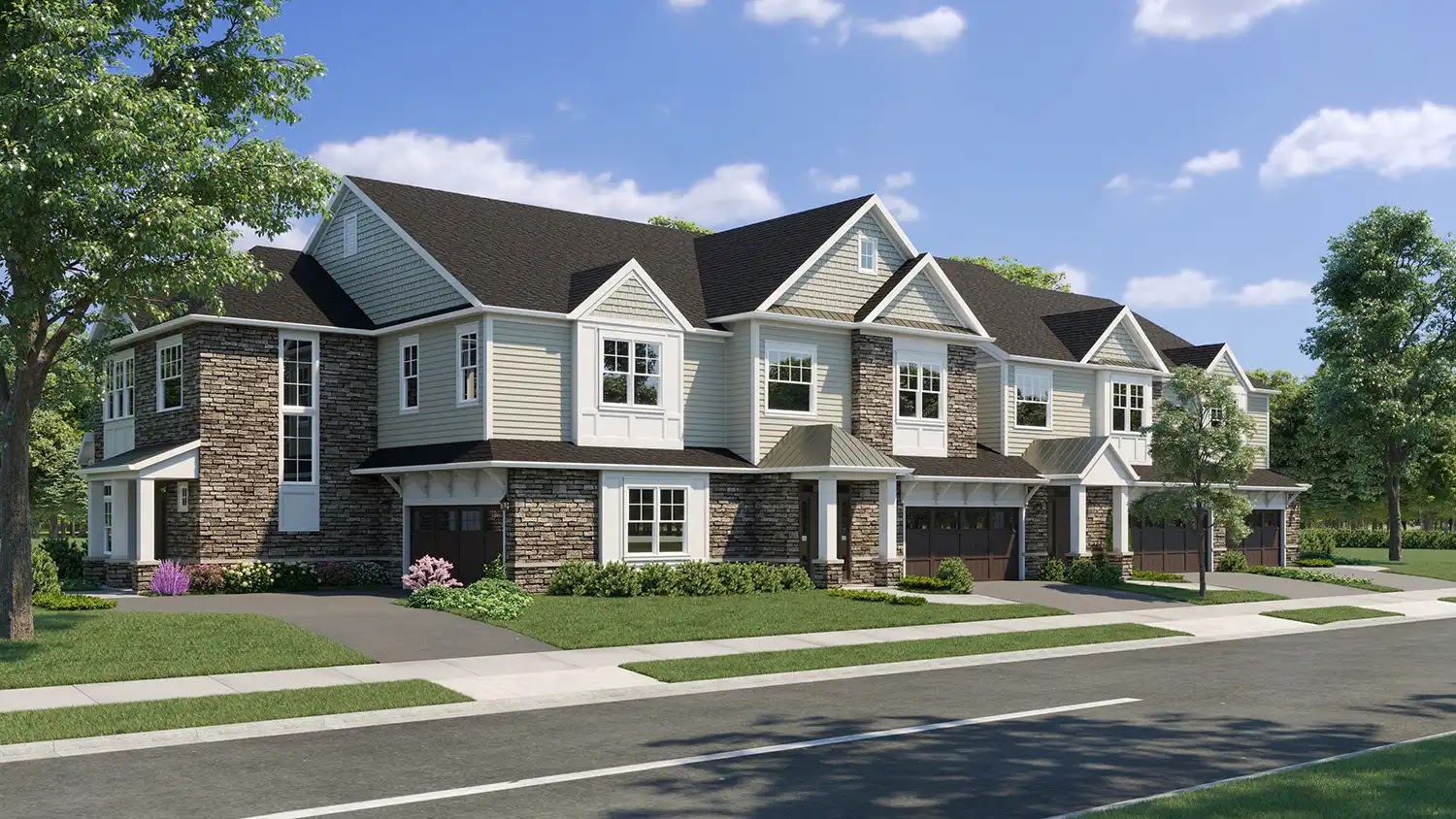
Residential Exterior
Assess Exterior Materials and Street Presence
Study the stone, siding, and building massing in a multifamily street view.
Architectural rendering revisions explained: what a revision round actually means
A rendering revision round is best understood as one complete feedback cycle. The project team reviews a draft image, collects comments, sends one coordinated response, the studio updates the rendering, and a revised version is delivered for review. That whole loop is the round.
This distinction matters because a round is not usually counted note by note. Ten comments on one image may still be part of one coordinated round if they are submitted together. By contrast, sending comments on Monday, adding more on Wednesday, and changing direction again after redelivery can create extra review cycles even if each individual request feels small.
For still architectural renderings, many projects commonly describe two or three included revision rounds. That should be treated as a practical expectation, not a fixed rule. A single exterior view for early design review, a full leasing image set, and a large mixed-use marketing package may all define revisions differently.
The safest place to look is the proposal or agreement. It should explain how many rounds are included, what counts as one round, when feedback is due, and what happens if the team requests new work after a stage has already been approved. If that definition is vague, clarify it before the first draft is produced.
A useful mental model is to separate three things:
- Individual comment: one requested adjustment, such as changing a paving tone or moving a person out of the foreground.
- Revision round: one complete package of comments followed by one update and redelivery cycle.
- Scope change: a request that reopens approved design, camera, geometry, deliverables, or concept direction.
That separation helps developers, architects, leasing teams, and ownership groups discuss revisions without assuming that every request has the same production impact.
What is usually included in revisions and what becomes a scope change
Included rendering revisions usually cover refinements to the image that fit within the agreed view, design, and deliverable. These may include targeted adjustments to materials, lighting balance, landscape density, people, furniture placement, signage visibility, or atmosphere. Even then, the agreement should define the boundary. A material correction based on an approved finish schedule is different from redesigning the material concept.
Scope changes tend to be requests that alter the underlying assignment rather than polish the image. Common examples include changing the camera concept after composition approval, redesigning a facade, adding floors, altering massing, changing the time of day from daytime to night, adding a new view, or asking for a different deliverable that was not part of the original scope.
The practical question is not whether the request matters to the client. It may matter a great deal. The question is whether the request reopens work that was already approved or adds production work that was not included. A late facade change can affect model geometry, materials, reflections, lighting, entourage, and post-production. A late camera change can expose areas of the site or interior that were never built for that view.
Consider an ownership team that approves a tower perspective during the preview stage, then later asks to add floors and revise the facade expression. That is not a simple visual edit. It changes the architectural content of the image and can reset several parts of production.
None of this means clients should avoid important changes. It means those changes should be named accurately. A normal revision refines the agreed image. A scope change changes what the studio is being asked to produce. When the distinction is clear, the team can decide whether the added cost or schedule impact is worth the change.
How to give rendering feedback the studio can actually use
The most useful rendering feedback is consolidated, written, image-specific, and actionable. A rendering studio should not have to interpret five separate email chains, a marked PDF from the architect, a call summary from ownership, and a separate message from leasing that contradicts the earlier notes.
A good feedback package identifies the project, image number, camera or view name, revision round, date, marked area, requested action, reviewer, and priority. If a reference is needed, include the reference and explain what should be taken from it. For example, “Use this brick tone as the target color” is much clearer than attaching a mood image with no instruction.
Specific comments are also more useful than subjective placeholders. “Make the lobby warmer” may be understandable in conversation, but it leaves room for interpretation. “Warm the cove lighting slightly, reduce the blue cast on the stone floor, and keep the reception desk finish unchanged” gives the studio a much better instruction set.
Grouping comments by category can reduce missed items. Useful categories include camera and composition, massing and geometry, facade, materials and finishes, lighting and time of day, landscape and context, people and entourage, signage, branding, and final retouching.
A compact review packet might include:
- Image ID or camera name.
- Revision round and date.
- Marked-up image with numbered comments.
- Requested action for each note.
- Reference drawing, schedule, photo, or material sample when relevant.
- Reviewer name or discipline.
- Priority level if not every item has equal importance.
This does not require an elaborate review platform for every project. The important point is traceability. The studio needs one reliable instruction set, and the client team needs a record of what was requested, approved, or deferred.
Free Guide
Plan Better Renderings Before Your Next Presentation
Use this quick guide to prepare clearer visual direction before project meetings, marketing reviews, or stakeholder presentations.
- Clarify the views your team needs before rendering starts
- Compare exterior, interior, and amenity visuals with more focus
- Prepare stronger notes for design, leasing, or marketing discussions
A practical checklist to help your team prepare.
Why revision timing matters more than most clients expect
Rendering revisions are easier to manage when feedback matches the production stage. Not every comment belongs at the end of the process. Some decisions need to be reviewed early because later work is built on top of them.
Camera and composition should usually be approved before the studio develops detailed materials, lighting, entourage, and final post-production. Early previews may be low-resolution, black-and-white, or less polished, but they are useful because they answer foundational questions: Is this the right view? Does the building read correctly? Is the arrival sequence clear? Is the foreground helping or distracting? Is the image showing the space the intended audience needs to understand?
Material and finish review should happen before final lighting and atmosphere are refined. If the team is still debating brick color, lobby flooring, ceiling treatment, or storefront framing, the studio may need to hold off on final polish. Otherwise, the same lighting and post-production work may need to be repeated after the design decisions settle.
Near-final review is best reserved for polish: small entourage changes, slight lighting balance, minor landscape edits, cleanup, color consistency, and final presentation checks. It is not the ideal moment to reopen the basic camera, massing, program, or facade direction unless the team accepts that the request may affect scope or schedule.
More review at the beginning can feel slower, especially when a marketing deadline is close. In practice, early approvals often reduce larger rework later. A five-minute decision about camera direction at preview stage may prevent hours or days of rebuilding, relighting, and retouching once the scene has moved further into production.
Who should review what so revision rounds do not get derailed
Most rendering projects involve more than one reviewer. That is normal. The problem starts when every reviewer sends separate comments directly to the studio without a shared decision path. Conflicting instructions can consume a revision round before the image has actually improved.
One accountable coordinator should collect comments, reconcile conflicts, and send the final feedback package. That person may be a project manager, architect, owner representative, marketing lead, or another team member with enough authority to resolve competing requests. The title matters less than the responsibility.
Review roles should also be assigned by subject. The architect or design lead usually needs to own comments about geometry, massing, facade articulation, mullions, rooflines, and site relationships. Interior design or the FF&E lead should usually review finishes, furnishings, lighting fixtures, and fit-out details. Marketing and leasing teams may focus on audience-facing elements such as signage, branding, storefront clarity, amenity mood, and whether the image supports the intended presentation use.
Ownership may need final authority on major visual direction, budget-sensitive changes, or brand-sensitive decisions. That authority should be clear before the near-final stage. A previously silent stakeholder entering late with preference changes can turn a clean revision process into a second design review.
This structure does not have to be rigid. Small teams may combine roles. Larger development teams may need a more formal signoff path. The key is to avoid sending the studio unresolved disagreements. If the architect says the storefront mullions must remain as drawn and leasing asks to simplify them for clarity, the client team should resolve that conflict before it becomes a rendering instruction.
What to confirm before production starts and before final signoff
Before production starts, confirm the revision terms in plain language. How many rounds are included? What counts as one round? Are comments due by a certain date? What changes are excluded? What happens if feedback arrives late, comes in separate batches, or contradicts earlier approvals?
Also confirm how extra rounds or post-approval changes are handled. Some agreements may define additional fees, schedule adjustments, or change orders for late camera changes, new views, major design changes, or requests made after final signoff. The exact terms vary, so assumptions are risky.
Deliverables deserve the same attention. Final delivery may mean flattened JPG or PNG images only. If the team needs layered PSDs, EXR files, render elements, camera metadata, alternate crops, or other editable assets, those should be discussed before production. Work files are not automatically included just because final images are included.
Feedback deadlines should also be realistic. If a studio is coordinating modeling, materials, lighting, and post-production around an agreed calendar, late comments can affect later milestones. Some terms may allow the studio to proceed if comments are not received by the agreed deadline. That should be understood before the team misses a review window.
Before final signoff, confirm who can approve the image and who can still request changes afterward. Final approval should mean the responsible reviewers have checked the decisions that belong to them: design accuracy, material intent, branding, entourage, and intended presentation use. If later changes are still possible, the team should know whether they are included refinements or new paid work.

Aerial View
Assess Rooftop Form and Exterior Context
The aerial angle clarifies rooftop amenities, massing, and the building's relationship to its surroundings.
FAQ
How many architectural rendering revisions are usually included?
Many still-image architectural rendering projects commonly include around two to three revision rounds, but this is not a universal rule. The number depends on the studio, package, image type, project complexity, deadline, and contract definition. Always confirm the included count before production starts.
Do small comments count as separate revision rounds?
Usually, a revision round is one coordinated package of comments followed by one studio update and redelivery cycle. Individual notes within that package do not necessarily count as separate rounds. The agreement should still define this clearly, especially if feedback arrives in multiple batches.
What kind of feedback helps a rendering studio make the right changes faster?
The clearest feedback identifies the image, camera or view, marked area, requested action, reference material, reviewer, and priority. A single consolidated submission is usually more useful than scattered comments from several people. Specific written notes reduce interpretation and make the rendering review process easier to track.
When does a rendering revision become a paid change order?
A revision may become a paid change when it reopens approved work, changes the camera concept late, adds a new view, alters massing or facade design, changes the deliverable, or arrives after final signoff. The exact line between included revision and scope change should be defined in the agreement.
Should you ask for layered PSDs or work files with final renderings?
Ask for layered PSDs, render elements, EXR files, or editable work files only if later editing, compositing, or production needs justify them. Final renderings often mean flattened JPG or PNG images unless additional files are included in scope. Clarify this before production rather than at handoff.
Free Guide
Plan Better Renderings Before Your Next Presentation
Use this quick guide to prepare clearer visual direction before project meetings, marketing reviews, or stakeholder presentations.
Prefer to talk it through? Email us at info@rmdesignstudio.com or call 630.540.1222.
What to Do Next?
Before the next rendering project or revision cycle, review the agreement and write down how revisions will be handled. Confirm the included number of rounds, what counts as one round, which changes are excluded, how extra rounds are approved, and whether late feedback affects the schedule or fee.
Create a simple feedback template for the team. Include image ID, camera name or view, revision round, date, marked area, change category, requested action, reference material, reviewer name, and priority. This keeps comments specific enough for production and clear enough for later review.
Assign one person to reconcile comments from ownership, architecture, interiors, marketing, leasing, and any other reviewers before the studio receives them. Then list which decisions must be approved at each milestone: camera and composition at preview, materials and finishes mid-process, and polish items near final review.
Finally, confirm deliverables before final signoff. Decide whether flattened JPG or PNG images are enough, or whether the project needs layered PSDs, render elements, camera data, alternate crops, or other files. The best revision process is not the one with the most comments; it is the one where the right people make clear decisions at the right stage.